May 21, 2026
Best High-Protein Wet Cat Food for Healthy Weight Management
If your cat could choose dinner, it wouldn’t be complicated. Meat. Moisture. Enough to fuel a few bursts of energy and a lot of rest. That instinct is grounded in biology, not preference. Cats are obligate carnivores, built to run on animal protein.
When weight becomes an issue—and for many cats, it does—the solution isn’t simply feeding less. It’s eating in alignment with that biology. That’s where high-protein wet cat food becomes one of the most effective weight management cat food strategies that actually work.
Obesity in cats is rarely just about quantity. It’s about composition. Too many calories from carbohydrates. Not enough protein to support lean muscle. Limited hydration. If you fix those variables, you can shift the trajectory.
Why Weight Management in Cats Requires a Different Approach
Cats don’t metabolize nutrients the way humans or even dogs do. Their bodies are optimized for protein metabolism. That means when their diet leans too heavily on carbohydrates, excess energy is more likely to be stored as fat.
At the same time, cats tend to live relatively sedentary indoor lifestyles. Combine lower activity with calorie-dense food, and weight gain becomes almost inevitable.
A better approach focuses on three core levers:
- Protein density to support lean muscle and metabolic health
- Moisture content to improve satiety and hydration
- Calorie control without sacrificing nutrition
This is exactly where high-protein wet cat food excels.
Do Cats Need High-Protein Cat Food?
They do—and not just in a general sense. Cats require it at a foundational level.
Protein isn’t optional for cats. It supplies essential amino acids like taurine, supports organ function, and maintains muscle mass. That last point matters most in the context of weight management.
When cats lose weight without enough protein, they don’t just lose fat. They lose muscle. That slows metabolism and makes it harder to maintain a healthy weight long term.
High quality protein cat food helps prevent that outcome. It supports fat loss while preserving lean tissue, which is the difference between temporary results and sustained health.
This becomes even more important in specific scenarios:
- Cats that are already overweight and in need of structured weight loss
- Aging cats, where muscle loss is more common (this is where high protein cat food for senior cats comes in)
- Multi-cat households where portion control is inconsistent
If you’re evaluating the best cat food for weight loss, protein should be the first variable you assess.
What Are the Benefits of High Protein Cat Food?
The impact of a high protein cat food shows up quickly, but the real value is cumulative. Over time, it changes how your cat eats, metabolizes energy, and maintains body composition.
1. Better Satiety and Appetite Control
Protein is more filling than carbohydrates. Cats eating a protein-forward diet tend to feel satisfied sooner and stay full longer. That translates into fewer calories consumed without needing to enforce strict restrictions.
In practical terms:
- Less begging between meals
- More consistent feeding behavior
- Reduced likelihood of overeating
2. Preservation of Lean Muscle
Muscle mass drives metabolism. The more lean muscle your cat maintains, the more efficiently their body uses energy.
A protein cat food supports:
- Muscle retention during weight loss
- Strength and mobility
- Long-term metabolic health
This is particularly important when helping an obese cat reach a healthier weight.
3. More Efficient Fat Loss
Weight loss is about eating less. It’s also about how the body uses what it’s given.
A protein-rich diet encourages the body to:
- Burn fat stores for energy
- Avoid breaking down muscle tissue
- Stabilize energy levels
That’s a more controlled and sustainable path to weight loss.
4. Improved Hydration Through Wet Food
Cats naturally have a low thirst drive. They’re designed to get moisture from food, not water bowls.
This is where high protein wet cat food has a clear advantage. Its higher moisture content supports:
- Kidney function
- Urinary tract health
- Digestion and nutrient absorption
For many cats, especially indoor ones, hydration alone is a compelling reason to choose wet over dry or ensure there is a combination of both in their diet.
5. Reduction in Empty Calories
Lower-quality foods often rely on fillers to increase volume. A high quality protein cat food does the opposite. It delivers dense, usable nutrition without unnecessary additives. That means:
- More nutritional value per serving
- Better portion control
- Fewer excess calories
Why Wet Food Changes the Equation
There’s a reason veterinarians often recommend weight management wet cat food over dry options.
It comes down to caloric density and volume.
Wet food contains significantly more water, which increases portion size without increasing calories. Your cat gets a full bowl—and a full stomach—without exceeding energy needs.
Dry food, including some high protein dry cat food, is more calorie-dense and easier to overfeed. Even small portion miscalculations can add up quickly.
Key differences:
- Wet food supports natural portion control
- It increases satiety without excess calories
- It improves hydration automatically
For weight management, those advantages compound.
How Much Protein Should a Cat Have Daily?
There’s no one-size-fits-all number, but there are clear benchmarks.
Most adult cats benefit from diets where 30–45% of calories come from protein, with higher levels often preferred for weight loss or active cats. Kittens require even more to support growth, making high protein kitten food essential early on.
What matters just as much as quantity is source.
When evaluating the highest protein cat food, look for:
- Named animal proteins (chicken, turkey, salmon)
- Minimal reliance on plant-based protein fillers
- Balanced formulation, not protein in isolation
Protein quality determines how effectively your cat can use what they’re eating.
What to Look for in High-Protein Wet Cat Food
Labels can be misleading. “High protein” doesn’t always mean high quality.
A strong formula should include:
- Real animal protein as the first ingredient
- Wet formulation for hydration and satiety
- Balanced nutrients beyond just protein content
- Options tailored for specific needs, like indoor or healthy weight
Many pet parents also look for grain-free wet cat food or grain free canned cat food. While not mandatory for every cat, reducing carbohydrate load can support weight management, especially in less active cats.
If you’re considering high protein grain free cat food, focus on the overall nutritional profile, not just the absence of grains.
Wellness Wet Cat Food: Purpose-Built Options
For pet parents looking to implement a protein-first approach, Wellness offers several wet food lines designed with both nutrition and palatability in mind.
Signature Selects: Protein-Forward and Highly Palatable
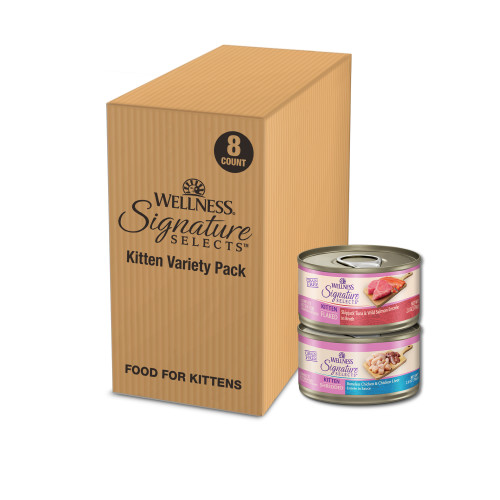
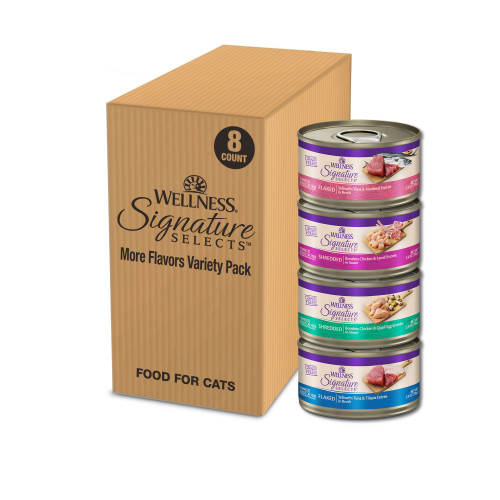
Wellness® CORE Signature Selects recipes feature real shredded meats in savory sauces, delivering high levels of animal protein in a format cats naturally gravitate toward. The texture matters here—it encourages slower eating and increases satisfaction.
These recipes are particularly useful for:
- Cats transitioning from dry food
- Picky eaters who still need high-protein wet cat food
- Owners focused on both nutrition and acceptance
Appetizing Entrees: Variety Without Compromise
Consistency matters, but so does variety. Cats can lose interest in repetitive meals, which creates friction in maintaining a structured feeding routine.
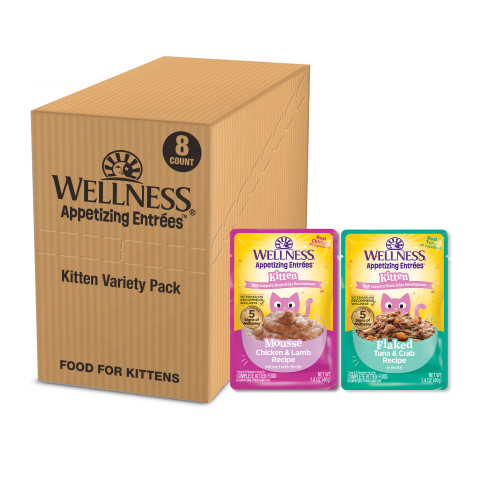
Wellness® Appetizing Entrees solve that by offering:
- Multiple protein sources
- Rotational feeding flexibility
- Balanced nutrition aligned with high protein cat food standards
This is especially helpful in multi-cat households or for long-term weight management plans.
Complete Health: Everyday Nutrition with Weight Support
Wellness® Complete Health provides a broader nutritional foundation, including options specifically designed for a healthy weight.
Within this line, you’ll find:
- Wellness Complete Health wet cat food for daily feeding
- Recipes aligned with the best wet cat food for weight loss criteria
- Options for grain-free wet cat food preferences
For many cat owners, this becomes the baseline diet—consistent, balanced, and aligned with long-term health goals.
Grain-Free vs. Grain-Inclusive: What Actually Matters
Grain-free has become a popular label, but it’s often misunderstood.
For weight management, the main goal is to reduce unnecessary carbohydrates and prioritize protein quality. Many high protein grain free cat food options achieve that by design, which is why they’re commonly recommended.
But grain-free alone doesn’t guarantee better results. Focus on:
- Protein source and percentage
- Overall calorie density
- Ingredient quality
If those are aligned, you’re on the right track—regardless of whether grains are included.
How Do You Help a Cat Lose Weight?
The instinct to simply cut food is understandable, but it’s not an effective long-term solution.
Sustainable weight loss comes from structure, not restriction.
If you want a deeper, practical breakdown of feeding strategies, portion control, and common mistakes, see this guide: A No-Nonsense Guide to Feeding Overweight Cats
A better approach includes:
- Transitioning to weight management wet cat food
- Feeding measured portions at consistent times
- Encouraging daily activity through play
- Monitoring weight gradually, not aggressively
Treats can still play a role, including high protein cat treats, but they need to be accounted for in the total daily intake.
The goal is steady progress. Rapid weight loss can be harmful in cats, particularly for liver health. A slow, controlled approach, supported by proper nutrition, is the safer and more effective path.
Life Stage Considerations
Nutritional needs shift over time, and protein remains central at every stage.
- Kittens require high protein kitten food to support rapid growth and development
- Adult cats benefit most from structured weight management cat food strategies
- Older cats need high protein cat food for senior cats to preserve muscle while managing calorie intake
Matching diet to life stage ensures that weight management doesn’t come at the expense of overall health.
The Bottom Line
Weight management is about eating healthy, not just less.
A high-protein wet cat food approach aligns with your cat’s biology. It supports lean muscle, improves satiety, increases hydration, and reduces excess calorie intake. All of this should be done without forcing extreme restrictions.
If you’re evaluating options, prioritize:
- High-quality animal protein
- Wet formulations over dry when possible
- Recipes designed with a clear nutritional purpose
Whether that’s through CORE Signature Selects, Appetizing Entrees, or Complete Health, the principle stays the same: give your cat what their body is built to use.
Because when nutrition aligns with biology, everything gets easier—weight included.